

Table of Contents
Densification in Switzerland — More living space through intelligent construction policy
What does “redensification” mean? - The definition
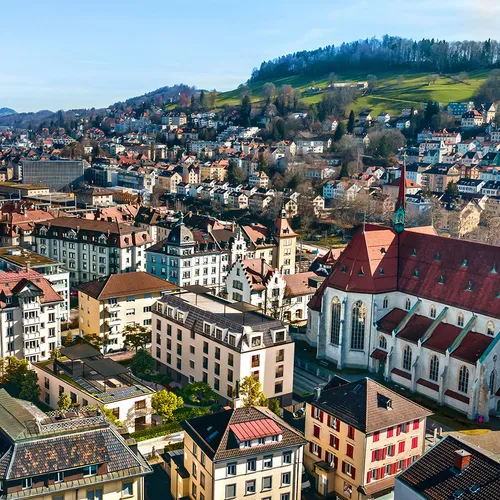
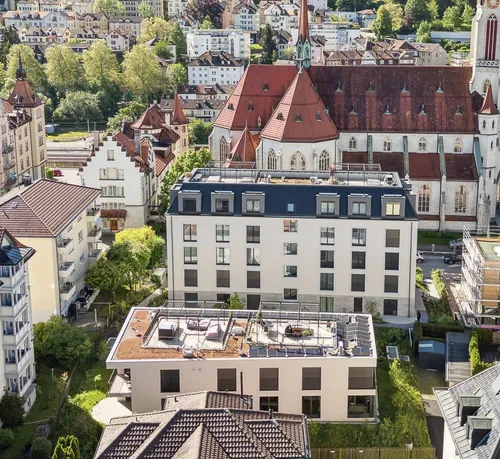
The demand for living space in Switzerland is growing, and at the same time, the requirements for ecological construction and the protection of green spaces are increasing. Die redensification aims to use existing construction areas more efficiently instead of developing new areas for settlements. It is also known as “internal settlement development” and includes the development of brownfields, vacant lots, backyards or flat roofs in urban and village areas. Among other things, this will include attic apartments and new buildings in existing settlements that specifically expand living space.
Benefits of redensification
Redensification has numerous benefits for residents and the environment:
- Efficient use of infrastructure: Densely populated residential areas benefit from existing structures, such as transport connections, shopping facilities, educational and leisure facilities.
- Environmentally friendly settlement development: The development of existing areas prevents unnecessary urban sprawl and preserves the surrounding green spaces. In this way, cities and municipalities make an active contribution to climate protection.
- Affordable housing: Unfavorably shaped or shady plots of land are often cheaper and enable cheaper new buildings.
- Maintaining the neighborhood structure: New residents move into ingrown quarters, which contributes to neighborhood stability and a lively social environment.
Challenges and risks of redensification
Despite the positive effects, densification also poses challenges. Experts estimate that only around 20% of built-up areas are suitable for compaction. Narrowly cut or unfavorably shaped plots of land in less developed areas make new construction projects difficult. The denser development of plots of land on which there is currently a single-family house offers great potential. There are 1.1 million of them in Switzerland, which currently provide homes for 2.3 million (https://www.wuestpartner.com/ch-de/2023/06/29/das-verdichtungspotenzial-von-einfamilienhausparzellen-realisierbar-oder-nur-theoretisch/).
Potential obstacles to redensification projects
Municipalities and investors often encounter hurdles that can slow down the construction process:
- Acceptance of the neighborhood: Higher buildings or larger complexes change the neighborhood structure, which can meet with resistance from residents.
- Building regulations: Construction and use rules often restrict the options for redensification and require lengthy approval procedures.
Example of successful redensification: Schlieren in the Canton of Zurich
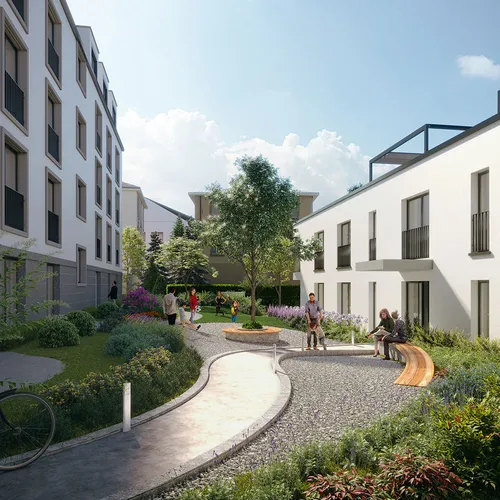
The “Giardino” project in Schlieren shows a successful implementation of settlement densification. Here, a new replacement building has expanded the total living space from 15,500 m² to 21,000 m². The number of apartments fell from 176 to 171, but the individual living space per unit rose by around 30%. Thanks to this densification, a modern, family-friendly garden with optimal infrastructure could be created.
Densification therefore offers a solution to meet growing housing demand sustainably and efficiently and at the same time contribute to reducing urban sprawl. However, in order to cope with the enormous population growth, the rate of compaction must be massively increased.